
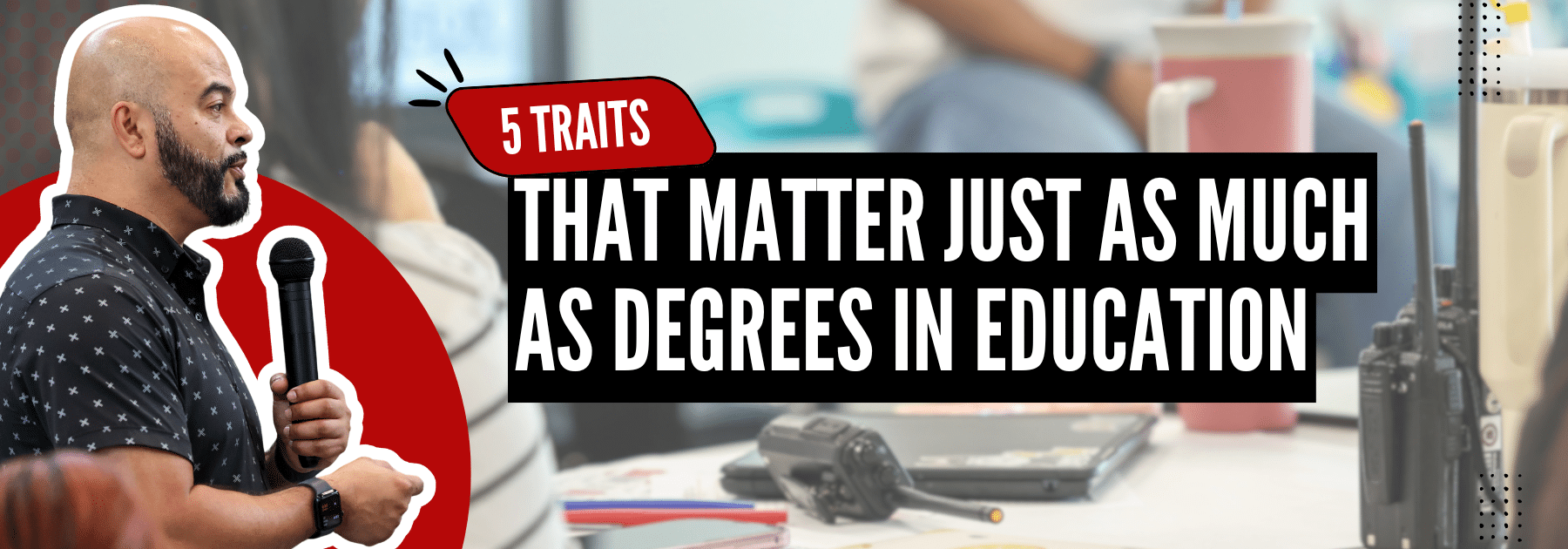
Why Caring Can Still Change Educational Outcomes
In education today, there is a growing concern about teacher shortages, vacant positions, and classrooms led by educators who may still be working toward certification. Across the country, schools are navigating staffing challenges that have left many wondering: What does this mean for student success?
Here is the honest truth: while certifications, training, and degrees absolutely matter, they are not the only thing that determines whether an educator changes lives.
Some of the most impactful educators students will ever meet may not have the longest résumé, the most letters behind their name, or decades of experience. What they do have are characteristics that students remember forever. They care. They connect. They create environments where students feel seen, heard, and supported.
Ernesto Mejía, CoolSpeak VP, has worked with schools across the country and seen firsthand that educational outcomes are often influenced by something deeper than credentials alone. Students thrive when educators bring heart, intention, and humanity into the classroom.
Here are five traits that can make just as much of an impact as degrees when it comes to helping students succeed.
1. Relationship Building Comes First
Before learning happens, connection happens.
The educators students remember are often the ones who took time to know them beyond attendance sheets, grades, or assumptions. Strong relationships are built when educators intentionally learn about students’ stories, strengths, challenges, and goals directly from students and families—not through hearsay or hallway conversations.
Relationship-building also means celebrating progress, not just pointing out problems.
Too often, communication with students and families happens only when something goes wrong. But what happens when schools lead with positives? When students hear, “I noticed your growth,” or families receive good news instead of concerns?
Relationships create trust, and trust creates effort.
When students know an educator genuinely cares, they are more likely to show up, try harder, and stay connected to learning.
2. Cultural Awareness and Acceptance Matter
Today’s classrooms are beautifully diverse. That means effective educators must do more than tolerate differences, they must value them.
Being culturally aware means respecting multilingualism, embracing different perspectives, and appreciating the lived experiences students bring into the classroom. It means recognizing that accents are strengths, not shortcomings. It means understanding that culture, family structures, religion, immigration experiences, and identity all shape how students engage in school.
No culture is “better” than another.
The goal is awareness, acceptance, and respect.
Students should never feel like they have to leave pieces of themselves at the classroom door to succeed.
3. Emotional Intelligence (EQ) Shapes the Classroom
One of the most underrated skills in education today is emotional intelligence.
How educators respond to frustration, conflict, or challenges often shapes the tone of an entire classroom. When emotions run high, it can be easy to react quickly to get louder, send students out, or escalate situations. But emotional intelligence asks something different of us. It asks us to pause, listen, and respond thoughtfully.
Today’s students are navigating a world that looks dramatically different than the one many adults grew up in. Social media, AI, mental health challenges, and constant connectivity all influence how students learn and interact.
Great educators understand that learning looks different today.
Strong EQ helps educators remain patient, adaptable, and emotionally grounded, not just for students, but for themselves.
4. Communication Can Change Outcomes
How educators communicate matters. Sometimes success is not about knowing more, it is about explaining things more clearly.
Students thrive when expectations are communicated in ways they actually understand. Families engage more when schools communicate with clarity, empathy, and consistency. And classrooms become healthier when correction happens respectfully rather than reactively.
Effective communication is not about sounding the smartest person in the room.
It is about making sure everyone in the room understands, feels included, and knows they matter.
Whether communicating with students, caregivers, or colleagues, tone and clarity can influence trust just as much as the message itself.
5. Caring Still Changes Lives
This one may be the most important of all: Students know when educators care.
They notice the teacher who stays late to help. The educator who shows up to a basketball game, choir concert, or school play. The person who checks in after a hard day or quietly provides school supplies to a student in need. They remember the adult who listened when life felt overwhelming.
Caring cannot be faked.Students feel it.
And when students feel cared for, something powerful happens: they begin to believe they matter. That belief can shift confidence, effort, attendance, relationships, and ultimately educational outcomes.
The Educators Students Remember
Years from now, most students may not remember every assignment, test score, or lesson. But they will remember how educators made them feel.
They will remember the teacher who believed in them. The educator who built relationships. The adult who listened with patience, communicated clearly, respected who they were, and cared enough to go the extra mile.
Degrees matter. Training matters. But relationships, emotional intelligence, cultural awareness, communication, and care matter too. Because sometimes, the educator who changes a student’s life is simply the one who cared enough to try.
Ready to Build a School Culture Where Students Feel Seen, Heard, and Supported?
Strong educational outcomes do not happen by accident. They happen when schools intentionally invest in the relationships, communication, and strategies that help students thrive.
At CoolSpeak, our professional development experiences equip educators with practical, relationship-centered strategies that go beyond theory and can be implemented immediately. From lowering referrals through stronger relationships to improving student engagement and strengthening school-family partnerships, our sessions are designed to be interactive, relevant, and rooted in real-world experience.
Whether your goal is to strengthen classroom culture, improve student connection, or create more meaningful engagement with families, CoolSpeak is here to help educators turn good intentions into lasting impact.
Ready to bring meaningful, engaging professional development to your school or district? Connect with the CoolSpeak team to learn how we can support your educators and students. Learn more about our professional development offerings or contact us today to start the conversation.

0 Comments